
Details
Category
Author
Role
Author / Writer
Industry
Arts & Literature
Wikidata
Q80440
Notable for
Anna Andreyevna Gorenko was born at Bolshoy Fontan, near the Black Sea port of Odessa, and moved with her family to Tsarskoye Selo, near St.
Birth Date
1889-06-11
Death Date
1966-03-05
Gender
female
Nationality
Russian Empire
Birthplace
Odesa
Occupations
writer, translator, literary critic, poet, literary scholar, librettist
Education
Tsarskoye Selo Girls School
Bio
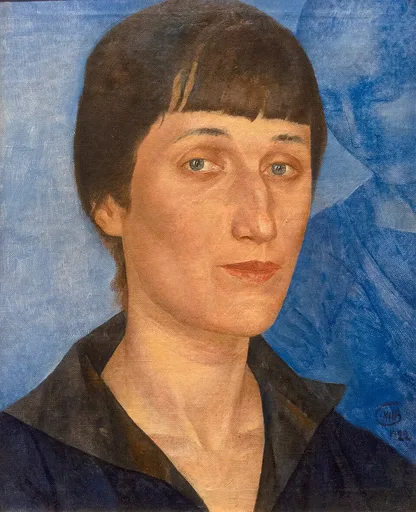
Anna Andreyevna Gorenko was born at Bolshoy Fontan, near the Black Sea port of Odessa, and moved with her family to Tsarskoye Selo, near St. Petersburg when she was eleven months old. Her parents were both descended from Russian nobility. From age 7 to 13 she and her family spent their summers in a dacha near Sevastopol. She started writing poetry at the age of 11, and was first published at age 17. Her father did not want poetry published under his name, so she adopted her grandmother's surname "Akhmatova" and published under the name Anna Akhmatova.
In 1905 her parents separated, and in 1906 she moved to Kiev. In 1910, she married another poet, Nikolay Gumilev and began attending Kiev University to study law. After one year, she then moved to St Petersburg to study literature. She became known in literary circles in St Petersburg's and gave regular public readings of her work. In 1910, she co-founded the influential Guild of Poets, which went on to develop the Acmeist anti-symbolist school of poetry.
In 1912, she published her first book, *Evening*, with the Guild of Poets. She also gave birth to a son, Lev.
In 1918, at the height of her fame, she ended her difficult marriage to Nikolay Gumilev and went on to marry another poet, Vladimir Shilejko. She shortly began having affairs again. In 1921 her first husband was executed for his alleged role in a monarchist anti-Bolshevik conspiracy. His execution, along with those of 61 others of Russia's intelligentsia, led to the break-up of the Acmeist poetry group.
Akhmatova and her son Lev were criticized by the Marxist state as representing a "bourgeois aesthetic", and in 1925 her work was unofficially banned. She continued to write (but not to publish) poetry while working as a translator and critic. Because of his parentage, her son Lev was denied admission to academic institutions and was imprisoned several times on accusations of counter-revolutionary activity. She queued for hours to deliver him food packages and plead on his behalf.
Akhmatova married Nikolai Punin, and stayed with him until 1935. He was also repeatedly imprisoned and in 1953 he died in the Gulag. Stalin approved the publication of one volume of her poetry, but it was withdrawn and pulped after only a few months. During this time, the government kept her under surveillance, going so far as to place recording devices in her flat, and produced 900 pages of reports on her. Despite this suppression, her work continued was secretly circulated in the gulags.
During World War II, Akhmatova read to soldiers in military hospitals and on the front line. She witnessed the 900 day Siege of Leningrad, and in 1940, she began to write "Poem without a Hero", which she considered to be her major work. In 1946 she received a visit from the liberal, western, Jewish philosopher Isaiah Berlin in 1946, and was accusing by the government of poisoning the minds of Soviet youth. Surveillance of her was increased and she was expelled from the Union of Soviet Writers.
In 1949 Akhmatova's son Lev was sentenced to 10 years in a Siberian prison camp. She spent several years trying to get him released, and she began to publish overtly propagandist poetry praising Stalin and his regime, although she did not consider this work, which may have saved both her life and her son's, as part of her official corpus. In 1951 she was readmitted to Union of Writers. In 1956 her son Lev was released from the prison camp, and her poetry began to be published again. Several books of her collected poetry were published in the following years.
In 1962 she was visited by Robert Frost and in her dacha in Komarovo she met with young Russian poets. In the 1960s she had become more popular in the than she had been before the revolution. Even the government came to recognize her as one of the major poets of the Silver Age, and she was permitted to travel. She visited Sicily and England, meeting with some pre-revolutionary friends and receiving the Taromina Prize. She died shortly after returning to Russia. Thousands attended the two memorial ceremonies which were held in Moscow and in Leningrad. After being displayed in an open coffin, she was interred at Komarovo Cemetery in St Petersburg.
Akhmatova's poem *Requiem*, which documented her experiences during the 1930s when she lived in poverty and her son and husband were repeatedly arrested, was finally published within USSR in 1987.
Personal Name
Anna Andreevna Akhmatova
Awards
Taormina prize, Medal "For the Defence of Leningrad", Jubilee Medal Medal "In Commemoration of the 250th Anniversary of Leningrad", Medal "For Valiant Labour in the Great Patriotic War 1941–1945"
Languages
Russian
Relationships
Written By (Incoming)
RéquiemRekvii︠e︡mEin niedagewesener HerbstKoreǐskaia klassicheskaia poeziia.PoemsStixi Perepiska Vaspaminaniya Ikanagrafiya.U samogo mori͡a =The complete poems of Anna Akhmatova =Way of all the earthVremia prishloPamyati Anny AkhmatovoiSochineniya.EveningLirikaPoems of AkhmatovaAnno Domini MCMXXI.ChetkiO PushkineStikhi i prozaEvening (Poems 1912)Way of all the EarthSochinenii︠a︡Poème sans hérosPoem without a Hero and Selected PoemsShirim liriyim, ReḳviʾemPis'maStikhotvoreniia [1909-1957.Anna AkhmatovaStikhi i prozaSiniĭ vecherAkhmatovaAnno domini MCMXXIRequiem and Poem without a heroTaĭny remeslaSevernye elegiiRequiemMusicSerebri͡a︡nai͡a︡ ivaThe Complete Poems of Anna AkhmatovaIntimationsSochineniyaAnno Domini MCMXXI [i.e. millesimo nongentesimo vicesimo primo ]RekviemDvenadtsat' stikhotvoreniǐ iz Podorozhnika.Beg vremeniReekviem.[Stikhotvorenii͡a︡Forty-seven love poems.Stikhotvoreniia, [1909-1957].Poems of Akhmatova =Vecher ̀My half centuryStikhotvoreni|i|a i poėmySelected early love lyricsGolosa poe tovNe tainy i ne pechali...ChetkiStikhotvorenii︠a︡ i poėmyU Samago MoriaStikhotvorenii͡a︡Stikhotvoreniya i poemySochinenii͡a︡ v dvukh tomakhAnna AkhmatovaSobranie sochineniĭ. V 6 t.ReekviemIz shesti knigStikhotvorenii︠a︡Anno DominiIzbrannoeBeg vremeniStikhotvoreniya i poemyAt the Very Edge of the SeaPiat'desiat stikhotvoreniǐ.Sobranie sochineniĭ v shesti tomakhAnno DominiSelected Poems of Anna AkhmatovaRequiem ; and, Poem without a heroRequiem.The Complete Poems of Anna AkhmatovaRekviem.Zapisnye knizhki Anny Akhmatovoĭ (1958-1966)Stikhotvoreniia, 1909-1960.You Will Hear ThunderIzbrannye stikhotvoreniia.Stikhotvorenii︠a︡White flockTaĭny remeslaTainy remeslaSochineniyaSobranie sochineniĭ. V 6 t.The Complete Poems of Anna AkhmatovaSochineni|i|a / Anna AkhmatovaStikhotvoreniia i poemySevernye ėlegiiIzbrannye stikhotvoreniia.Selected Poems. (Review Copy)Golgofa XX vekaPodorozhnik.Fear and the MuseIzbrana|i|a lirikaPutem vsei︠a︡ zemliMy half centuryStikhov moikh belai︠a︡ stai︠āSelected PoemsPoème sans hérosGedichte.Selected poemsStikhotvoreniyaAnno Domini MCMXXITwenty poemsSelected PoemsPoezje wybraneVerstyPoème sans héros, Requiem et autres œuvresOt t͡s︡arskoselʹskikh lipBelaia staiaMisterios del oficioPoems of AkhmatovaStikhotvoreniya i poemyRequiem.PoemsA Stranger to Heaven and EarthEveningGolosa poėtovDvenadtsat' stikhotvoreniǐ iz PodorozhnikaI︠U︡nostʹIzbrannye stikhotvoreniya.Poems of Akhmatova.Серебряный векPoezje wybrane.Poems of AkhmatovaStikhi i prozaYou will hear thunderSeroglazyĭ korolʹRekviem.SochineniyaMój PuszkinPodorozhnikStikhi i proza.Stikhotvorenii͡a i poėmyRekviem.TekstyChetkiI͡A-golos vash--Stikhotverenii︠a︡ i poemyMy Half CenturyBílé hejnoA poem without a heroPoems of Akhmatova.Anna AkhmatovaIzbrannye stikhotvorenii͡a.Rekviem, 1935-1940Poem Without a HeroSelected poems =VerstySinii vecherPoema bez geroi︢aStikhotvorenii͡a︡ i poėmyStikhotvorenii͡a︡ChetkiA poem without a heroWhite FlockRequiemStikhi, perepiska, vospominaniya, ikonografiyaSelected poems [by] Anna AkhmatoväLit︠s︡aU samogo moria.Sochineniya v dvukh tomakhRequiemStikhotvorenii︠a︡ i poemyStikhotvorenii͡a, 1909-1960The complete poems of Anna AkhmatovaDykhanie pesniChetkiBeg vremeniIzbrannaya lirika.