
Details
Category
Author
Role
Author / Writer
Industry
Arts & Literature
Wikidata
Q378404
Notable for
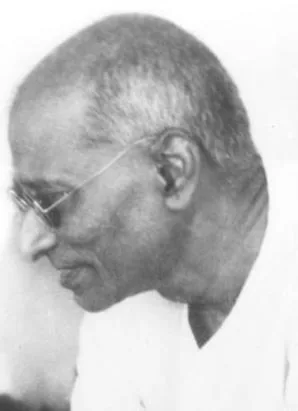
Chakravarti Rajagopalachari (Tamil: சக்ரவர்த்தி ராஜகோபாலாச்சாரி) (10 December 1878 - 25 December 1972), informally called Rajaji or C.R., wa
Birth Date
1878-12-10
Death Date
1972-12-25
Gender
male
Nationality
India
Birthplace
Thorapalli
Occupations
lawyer, linguist, translator, composer, writer, peace activist, politician, freedom fighter
Education
Bangalore University
Bio
Chakravarti Rajagopalachari (Tamil: சக்ரவர்த்தி ராஜகோபாலாச்சாரி) (10 December 1878 - 25 December 1972), informally called Rajaji or C.R., was an Indian lawyer, Indian independence activist, politician, writer, statesman and leader of the Indian National Congress who was the last Governor-General of India. He served as the Premier of the Madras Presidency, Governor of West Bengal, Minister for Home Affairs of the Indian Union and Chief Minister of Madras state. He was the founder of the Swatantra Party and was one of the first recipients of India's highest civilian award, the Bharat Ratna. Rajaji vehemently opposed the use of nuclear weapons and was a proponent of world peace and disarmament. He was also nicknamed the Mango of Salem.
Rajagopalachari was born in Thorapalli in the then Salem district and was educated in Central College, Bangalore and Presidency College, Madras. In 1900 he started a prosperous legal practice. He entered politics and was a member and later President of Salem municipality. He joined the Indian National Congress and participated in the agitations against the Rowlatt Act, the Non-Cooperation movement, the Vaikom Satyagraha and the Civil Disobedience movement. In 1930, he led the Vedaranyam Salt Satyagraha in response to the Dandi March and courted imprisonment. In 1937, Rajaji was elected Premier of Madras Presidency and served until 1940, when he resigned due to Britain's declaration of war against Germany. He later advocated cooperation over Britain's war effort and opposed the Quit India Movement. He favoured talks with Jinnah and the Muslim League and proposed what later came to be known as the "C. R. Formula". In 1946, Rajagopalachari was appointed Minister of Industry, Supply, Education and Finance in the interim government. He served as the Governor of West Bengal from 1947 to 1948, Governor-General of India from 1948 to 1950, Union Home Minister from 1951 to 1952 and the Chief Minister of Madras state from 1952 to 1954. He resigned from the Indian National Congress and founded the Swatantra Party, which fought against the Congress in the 1962, 1967 and 1972 elections. Rajagopalachari was instrumental in setting up a united Anti-Congress front in Madras state. This front under C. N. Annadurai captured power in the 1967 elections.
Rajaji was an accomplished writer and made lasting contributions to Indian English literature. He is also credited with composition of the song Kurai Onrum Illai set in Carnatic music. He pioneered temperance and temple entry movements in India and advocated Dalit upliftment. Rajaji has been criticized for introducing the compulsory study of Hindi and the controversial Madras Scheme of Elementary Education in Tamil Nadu. Critics have often attributed his pre-eminence in politics to his being a favorite of Mahatma Gandhi and Jawaharlal Nehru. Rajaji was described by Gandhi as the "keeper of my conscience".
Personal Name
C. Rajagopalachari
Awards
Sahitya Akademi Award, Bharat Ratna, honorary doctor of the University of Calcutta
Languages
Tamil, English, Telugu
Positions
- Governor-General of India (1948–1950)
- Minister of Home Affairs (1950–1951)
- Governor of West Bengal (1947–1948)
- Chief Minister of Tamil Nadu (1952–1954)
- Chief Minister of Tamil Nadu (1937–1939)
- Member of the Constituent Assembly of India (1946–present)
- Member of the Advisory Committee of the Constituent Assembly of India (1947–present)
Relationships
Written By (Incoming)
Śrīkr̥ṣṇanu tōrisida dāri, athavā, Śrī Bhagavadgītā vastuprakāśikeBhagavad Gita a Handbook of StudentsPiḷḷaiyār kāppār̲r̲in̲ār.Our CultureUpanishads for the lay readerUpanishadsThe impending fast of Mahatma GandhiHinduism; doctrine and way of lifeHinduism; doctrine and way of lifeRamayana.On the Suez problemThe Story of RamayanMahabharataRājāji kataikaḷMahabharataSatyam eva jayateMahabharataIrāmāyaṇam.Mutal mūvar.The message of Kancheepuram Sarvodaya SammelanKaṇṇan̲ kāṭṭiya val̲i, atāvatu, Pakavatkītai poruḷviḷakkamĀticaṅkarar aruḷiya Paja KōvintamMahabharataOur CultureRamayanaUpanishadsKaṭṭuraikaḷ.Ār̲r̲in̲ mōkam.RamayanaThe Ayodhya Canto of the Ramayana as Told by KambanRajaji's speechesOur cultureStories for the innocentKuralRamayana Vol-44RamayanaThe unification of culturesTirumūlar tavamol̲iMakāpāratam.The way outMahabharataPaja KōvintamSelected works of C. RajagopalachariHinduism, Doctrine and Way of LifeHinduism Doctrine And Way Of LifeAmbedkar refutedMahabharataRamayanaHinduism, Doctrine and Way of LifeMahabharataUpaniṣatap palakaṇiMahābhārataHinduism, doctrine and way of lifeSpeeches of C. Rajagopalachari, only Indian Governor-General of India, June 1948-January 1950.Nirantarac celvaṃ.Stories for the InnocentRajaji's speechesRamayanaEnglish
English
Satyam eva jayate vol-IThe question of EnglishRājājiyavara kathegaḷuReconciliation, why and howThe RamayanaThe fatal cart and other stories.Gandhi-Jinnah TalksSeremareya mātukateRamayanaHinduism; doctrine and way of lifeĀtma cintan̲ai.The voice of the uninvolvedStories For The InnocentMahabharataStories for the InnocentMahabharataSatyam eva jayateRamayanaRamayanaBharati-the Tamil poetMahabharata [Paperback] [Jan 01, 2010] C.RajagopalachariRescue democracy from money-powerKaṇṇan̲ kāṭṭiya val̲i.Tiṇṇai racāyan̲am.The impending fast of Mahatma GandhiAvvaiarGandhiji's teachings and philosophyJail diaryMutal mūvar.The Teachings of Ramakrishna ParamamhamsaHinduismMahabharataRescue democracy from money-powerMahabharataSōkratar.MahabharataMahabharataRamayaRaja Gopalachari's commentaries on Indian Partnership Act, 1932Vyāsara autaṇaThe way outRamayana.Rajaji's speechesIrāmāyaṇam.RamayanaSri Ramakrishna UpanishadRaja Gopalachari's commentaries on Indian Partnership Act, 1932