
Details
Category
Author
Role
Author / Writer
Industry
Arts & Literature
Wikidata
Q1173832
Notable for
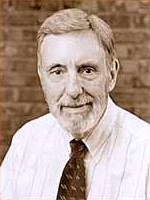
**David Brion Davis** (16 February 1927- )
David Brion Davis is '*Sterling Professor*' of History Emeritus at Yale, Connecticut as well a
Birth Date
1927-02-16
Death Date
2019-04-14
Gender
male
Nationality
United States
Birthplace
Denver
Occupations
historian, university teacher, author
Education
Harvard University
Bio
**David Brion Davis** (16 February 1927- )
David Brion Davis is '*Sterling Professor*' of History Emeritus at Yale, Connecticut as well as Director Emeritus of Yale’s Gilder Lehrman Center for the Study of Slavery, Resistance, and Abolition.
Born in Denver in 1927, the son of journalist, novelist, and screenwriter Clyde Brion Davis (1898-1962) and the artist and writer Martha Wirt Davis (1905-1951), David lived a peripatetic childhood in California, Colorado, New York, and Washington State and attended five high schools in four years.
Eighteen and having graduation from Dartmouth College (Hanover, New Haven) in June 1945, David was drafted and trained as a combat infantryman in preparation for a fall 1945 invasion of Japan. However the war ended and, because he had high school German, was assigned to the occupation in Germany for a year and became a member of the army's Security to police civilians.
At the time he was deciding he career and in a lengthy letter to his eighty-five year-old grandmother he described his experiences with "*the appalling racism that many white American soldiers displayed when they encountered black soldiers in the segregated army*". And adamantly, at first, wanting to go into this physics and mathematics, but later deciding to major in history, continuing into post-graduate research, and finally teaching, in college.
Indeed he went back to Dartmouth where by 1950 he won his Artium Baccalaureatus (summa cum laude) and was offered a post as instructor in history. He then got into Harvard University and whilst studying for his degree began teaching at Cornell University in Ithaca, New York as assistant professor. He achieve his Artium Magister degree three years later, followed by his Doctor of Philosophy by the end of another three years. <!-- 1956 -->
He continued at Cornell in the position of associate professor (1958-63), and within two years as '*Ernest I. White*' Professor of History and had gained his Oxford University Masters (1963-69) a total of fourteen years even with a brief time lecturing in India.
By the end of the 60's he was at Yale University, New Haven, Connecticut as their professor of history and working on yet another Masters of Arts (1969-72) at the end of which he was made '*Farnham*' Professor of History (1972-78) and finally '*Sterling*' Professor of History in 1978 - he remained, specializing in *Slavery in the Western World and America*, *Antebellum America*, and *Intellectual history* at Yale until 2001.
His books include *Homicide in American Fiction* (1957); *The Problem of Slavery in Western Culture* (1966); *The Problem of Slavery in the Age of Revolution* (1975); *Slavery and Human Progress* (1984); *Revolutions: American Equality and Foreign Liberations* (1990); *In the Image of God: Religion, Moral Values, and Our Heritage of Slavery* (2001), *Challenging the Boundaries of Slavery* (2003), and *Inhuman Bondage: The Rise and Fall of Slavery in the New World* (2006). He writes frequently for *The New York Review of Books*.
Personal Name
David Brion Davis
Awards
Guggenheim Fellowship, National Book Award, Harvard Centennial Medal, Ralph Waldo Emerson Award, Pulitzer Prize for General Nonfiction, Anisfield-Wolf Book Awards, Bancroft Prize, Albert J. Beveridge Award, Sterling Professor, National Humanities Medal, Harold Vyvyan Harmsworth Visiting Professor of American History, Bruce Catton Prize, National Book Critics Circle Award in Nonfiction
Languages
English
Positions
- chairperson (1988–1989)
Relationships
Written By (Incoming)
The problem of slavery in Western culture.From homicide to slaverySlavery and human progressThe problem of slavery in the age of emancipationProblem of Slavery in the Age of Revolution, 1770-1823Slavery and Human ProgressThe emancipation momentChallenging the boundaries of slaverySlavery in the colonial ChesapeakeThe fear of conspiracyThe fear of conspiracyThe Problem of Slavery in Western Culture (Pelican)The Great RepublicHomicide in American fiction, 1798-1860The Problem of Slavery in the Age of EmancipationThe slave power conspiracy and the paranoid style.Ante-Bellum ReformWas Thomas Jefferson an authentic enemy of slavery?RevolutionsThe problem of slavery in Western cultureProblem of Slavery in the Age of Revolution, 1770-1823Challenging the Boundaries of SlaveryAnte-bellum reform.Homicide in American fiction, 1798-1860Problem of Slavery in Western CultureHomicide in American Fiction 1798-1860 A Study in Social ValuesFrom Homicide to SlaveryFrom Homicide to SlaveryInhuman bondageInhuman BondageProblem of Slavery in the Age of EmancipationInhuman bondageThe Problem of Slavery in Western Culture (Pelican)The slave power conspiracy and the paranoid styleHumanitarianism or control?Homicide in American Fiction, 1798-1860Antebellum American CultureFrom homicide to slaveryEl problema de la esclavitud en la cultura occidentalThe problem of slavery in Western cultureThe Great RepublicThe emergence of immediatism in British and American antislavery thoughtHomicide in American fiction, 1798-1860