
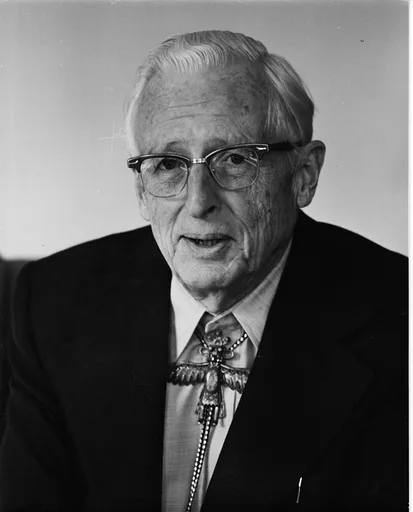
Details
Category
Author
Role
Author / Writer
Industry
Arts & Literature
Wikidata
Q1240181
Notable for
From [en.wikipedia.org/wiki/Donald_Howard_Menzel](http://en.wikipedia.org/wiki/Donald_Howard_Menzel):
Born in Florence, Colorado, Menzel
Birth Date
1901-04-11
Death Date
1976-12-14
Gender
male
Nationality
United States
Birthplace
Florence
Occupations
astronomer, ufologist, university teacher, astrophysicist
Education
Princeton University
Bio
From [en.wikipedia.org/wiki/Donald_Howard_Menzel](http://en.wikipedia.org/wiki/Donald_Howard_Menzel):
Born in Florence, Colorado, Menzel was a very good student, especially interested in mathematics and science. He learned to read very early, learned Morse code from his father, collected ore specimen, became an amateur radio operator, built up a large home chemistry lab, was an Eagle Scout, and learned Spanish. [1]
At 16 years old, Menzel enrolled at the University of Colorado to study chemistry. However, observing the solar eclipse of June 8, 1918 led him to change his course of study to astronomy. Menzel earned an internship at Princeton University, and spent summer vacations at Harvard University as a research assistant to Harlow Shapley.
Menzel studied at the University of Denver and received his Ph.D. from Princeton. After earning his Ph.D. in 1924, Menzel taught at the University of Iowa and Ohio State University before being hired as assistant astronomer at the Lick Observatory in California in 1926. Menzel was among the first theoretical astrophysicists in the world. He worked at Lick Observatory until 1932 when he accepted a position at Harvard. From 1954-56 he was President of the American Astronomical Society. From 1964 to his death, Menzel was a U.S. State Department consultant for Latin American affairs.
He began teaching at Harvard in 1932, and earned full professorship in 1938; in 1952 he was appointed acting director of the Harvard Observatory, and was the full director from 1954 to 1966, when the observatory became an international center of radio astronomy. He retired from Harvard in 1971.
Menzel initially performed solar research, but later concentrated on studying gaseous nebulae. His work with Lawrence Aller and James Gilbert Baker defined many of the fundamental principles of the study of planetary nebulae.
He wrote *A Field Guide to the Stars and Planets*, part of the Peterson Field Guides.
<br/>
[1]: http://en.wikipedia.org/wiki/Donald_Howard_Menzel
Personal Name
Donald Howard Menzel
Awards
Prix Jules Janssen, Eagle Scout
Languages
English
Relationships
Written By (Incoming)
A field guide to stars and planetsSelected Papers on Physical Processes in Ionized PlasmasFlying saucersGuía de campo de las estrellas y los planetas de los hemisferios Norte y SurA study of line intensities in stellar spectra.Mathematical physics;The terrestrial abundance of the permanent gasesMathematical physicsAstronomyThe E layer of the ionosphereStellar interiorsA field guide to the stars and planetsProblems of the solar atmosphereA field guide to the stars and planetsOur SunSurvey of the universeEquivalent widths and the temperature of the solar reversing layerAbsorption coefficients and hydrogen line intensitiesStellar interiorsA field guide to the stars and planets, including the moon, satellites, comets, and other features of the universeOur sun.The UFO enigmaAstronomyA Field guide to the stars and planetsOptical refraction in a planetary atmosphere with application to the apparent diameter of a planet and to occultationStars and planetsThe Story of the Starry UniverseStellar interiorsA Field Guide to the Stars and PlanetsField Guide to the Stars and PlanetsFlying SaucersField Guide to the Stars and PlanetsPrinciples of Atomic SpectraA dynamic spectrum analyzer for Sacramento PeakRevision of Geophysics 220 notesFundamental Formulas of Physics, Volume OneOur sun.The radio noise spectrum.Fundamental formulas of physics.The universe in action.Flying saucers.Our sunStars and planetsThe sun and solar studiesMathematical physicsTheRadio Noise SpectrumAstronomy [by] Donald H. Menzel.Astronomy.Planets, Stars and GalaxiesA field guide to the stars and planets, including the moon, satellites, comets, and other features of the universeOur SunStellar interiors [by] Donald H. Menzel, Prabhu Lal Bhatnagar and Hari K. Sen.AstronomyUFO's--the modern mythOur sun.Mathematical physics.Elementary manual of radio propagationTheoretical problems of stellar absorption linesAstronomyThe world of flying saucersOur sun.Classification of solar prominences-I-1950Writing a technical paperField Guide to Stars and Planets (Peterson Field Guides)Eclipse in Ak BulakWriting a Technical PaperSurvey of problems for solar observationsStellar interiorsStellar InteriorsFinal report on the occulation of Regulus by Venus, July 7, 1959Mathematical physicsFriendly StarsStars and planetsSelected papers on physical processes in ionized plasmas.Final report for the operation of a solar observatory at Sacramento Peak, New MexicoWriting a technical paperWriting a technical paperA preface to solar researchA field guide to the stars and planetsStars and planetsAstronomyFundamental formulas of physicsVariations in the thermodynamic state of the chromosphere over the sunspot cycleFundamental Formulas of Physics, Volume OneFundamental formulas of physics.Fundamental Formulas of Physics - Volume 2Mathematical PhysicsFundamental formulas of physicsThe UFO enigmaFundamental formulas of physicsStellar Interiors. Volume Six.Multiplet strengths for transactions involving equivalent electrons Note on absolute multiplet strengthsFundamental Formulas of Physics, Volume One and Volume TwoOn the interpretation of nova spectra