
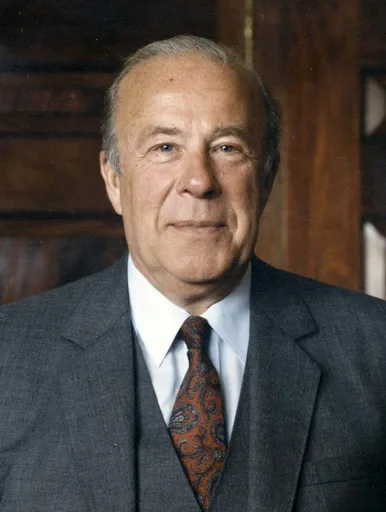
Details
Category
Author
Role
Author / Writer
Industry
Arts & Literature
Wikidata
Q313411
Birth Date
1920-12-13
Death Date
2021-02-06
Gender
male
Nationality
United States
Birthplace
New York City
Occupations
economist, military personnel, diplomat, university teacher, politician, entrepreneur
Education
Princeton University
Personal Name
George Pratt Shultz
Awards
Presidential Medal of Freedom, Democracy Service Medal, Order of the Rising Sun with Paulownia Flowers, 1st class, California Hall of Fame, Rumford Prize, Sylvanus Thayer Award, Distinguished Fellow of the American Economic Association, doctor honoris causa of Keiō University, Fellow of the American Academy of Arts and Sciences, honorary doctor of the Peking University, Honorary Officer of the Order of Australia, Financial Times Person of the Year, Annenberg Award for Excellence in Diplomacy, New Jersey Hall of Fame
Languages
English
Positions
- United States Secretary of State (1982–1989)
- United States Secretary of the Treasury (1972–1974)
- Director of the Office of Management and Budget (1970–1972)
- United States Secretary of Labor (1969–1970)
Relationships
Written By (Incoming)
Asia-Pacific and the futureMeeting our foreign policy goalsNuclear SecurityASEANHuman rights and the moral dimension of U.S. foreign policyThe open society and its friendsHuman rights and Soviet-American relationsThe quest for peaceThe U.S. and ASEANCSCE followup meeting concludes in MadridThe administration's arms control legacyForeign aid and U.S. policy objectivesNicaraguaU.S. role in the ILOMoral principles and strategic interestsJapan and America, international partnership for the 1980sLow-intensity warfareManaging the U.S.-Soviet relationship over the long termModernizing U.S. strategic forcesSoviet Jewry and U.S.-Soviet relationsThe United States and Central Americaethics of powerNuclear SecurityDeterrencePeace, friendship, and U.S.-Canada relationsU.S. foreign policyHuman rights and Soviet-American relationsChoose Economic FreedomHinge of HistoryU.S. role in the ILOIran and U.S. policyThe U.S. and Africa in the 1980sThe meaning of VietnamThe war that must never be foughtThe U.S. and ASEANOn alliance responsibilityPutting our house in orderLabor problemsForeign aid and U.S. policy objectivesNicaraguaThe U.S. approach to South AfricaThe U.S. and Central AmericaThe Administration's approach to Middle East peacemakingRisk, uncertainty, and foreign economic policyIran and U.S. policyAmerica's foreign policy agenda in 1988Conversations about EnergyThe U.S. approach to South AfricaPressures on wagedecisionsChallenges facing the U.S. and ASEANThe U.S. approach to South AfricaU.S. interests in the Persian GulfLeaders and followers in an age of ambiguityChoose Economic FreedomTurmoil and TriumphGuidelines, Informal Controls, and the Market PlaceU.S. approach to problems in the Caribbean basinBerlin and the cause of freedomThe future of American foreign policyBeyond the debt problemRisk, uncertainty, and foreign economic policyImplications of the Reykjavik Summit on Its Twentieth AnniversaryForeign assistance request for FY 1986Struggle for democracy in Central AmericaThe struggle against terrorismBuilding confidence and security in EuropeNuclear Enterprise : High-Consequence AccidentsThe challenge of African economic reformHinge of HistoryGravest DangerPromoting inter-American cooperationDistributed Power in the United StatesU.S. policy in Central America.Turmoil and TriumphDeterrenceReykjavik RevisitedRestoring the foreign affairs budgetU.S. objectives in LebanonJapan and America, international partnership for the 1980sChina and the U.S.Beyond DisruptionPlacement and retraining experience with workers displaced by shutdown of the main Armour plant in Fort Worth, TexasProposed refugee admissions for FY 1989U.S. objectives in LebanonHuman rights and Soviet-American relationsU.S. policy and the dynamism of the PacificLearning from ExperienceThe church as a force for peaceful change in South AfricaCommunicating with the World of IslamSoviet Jewry and U.S.-Soviet relationsU.S.-Soviet relations in the context of U.S. foreign policyThe struggle against terrorismU.S. objectives in LebanonPreventing the proliferation of nuclear weaponsProgress, freedom, and responsibilityU.S. foreign policy, realism and progressDemocracy and the path to economic growthTurmoil and triumphIran and U.S. policyNuclear SecuritySouthern AfricaScience and foreign policyHuman rights and Soviet-American relationsTime for ReflectionRestoring bipartisanship in foreign affairsBeyond the debt problemThe new international eraU.S. role in the ILOTrade, interdependence, and conflicts of jurisdictionLabor problemsThe writer and freedomIssues on My MindU.S. approach to problems in the Caribbean basinNational policies and global prosperityU.S. objectives in LebanonAchievements of the INF TreatyProject democracyA report to the Automation Fund CommitteeU.S. approach to problems in the Caribbean basinU.S. government and businessThe first George P. Shultz lecture on Middle East diplomacyThe U.S. and Africa in the 1980sTen years after the Helsinki Final ActThe ecology of international changeThe winning handDemocracy and the path to economic growthThe democratic future of South AfricaEconomic policy beyond the headlinesPromoting inter-American cooperationThe resurgence of democracy in Latin AmericaStatement at Senate confirmation hearingsAsia-Pacific and the futureA statement for PalestiniansThe campaign against drugsU.S. foreign policy, realism and progressU.S. interests in the Persian GulfU.S. interests in the Persian GulfIssues on My MindChallenges facing the U.S. and ASEANBerlin and the cause of freedominter-American systemPursuing an effective foreign policyU.S. policy in Central America.40th anniversary of the Marshall PlanPursuing an effective foreign policyThe struggle against terrorismUnity and dissentA forward look at foreign policyPublic service in AmericaModernizing U.S. strategic forcesComprehensive strategy for Central AmericaThe meaning of VietnamThe U.S. and the developing worldChallenges facing the U.S. and ASEANThe democratic future of South AfricaRestoring the foreign affairs budgetPursuing an effective foreign policyThe importance of the MX peacekeeper missileU.S. efforts to achieve peace in Central AmericaProject democracyReykjavikChallenges facing the U.S. and ASEANPeace, friendship, and U.S.-Canada relationsWinning the war against narcoticsEnhancing diplomatic securityNarcoticsNuclear Enterprise : High-Consequence AccidentsManaging the U.S.-Soviet relationship over the long termPutting Our House in OrderThe U.S. and Africa in the 1980sA forward look at foreign policyConversations about EnergyPromoting inter-American cooperationPublic diplomacy in the information ageBuilding confidence and security in EuropeU.S. efforts to achieve peace in Central AmericaReykjavik RevisitedU.S. foreign policyU.S. efforts to achieve peace in Central AmericaEconomic policy beyond the headlinesThe inter-American systemNuclear weapons, arms control, and the future of deterrenceGame ChangersU.S. foreign policyTurmoil and TriumphPressures on wage decisionsForeign aid and U.S. national interestsThe INF TreatyCommunicating with the World of IslamPursuing the promise of HelsinkiA changed worldThe U.S. and the developing worldWelcoming remarks to holocaust conferenceThe U.S. and the developing worldHinge of HistoryForeign aid and U.S. policy objectivesLearning from ExperienceMeeting the challenges of change in the PacificThe inter-American systemDemocracy and the path to economic growthThe U.S. and Africa in the 1980sManaging the U.S.-Soviet relationship over the long termEconomic cooperation in the Pacific BasinArms control, strategic stability, and global securityTurmoil and triumphU.S.-Soviet relations in the context of U.S. foreign policyProposed refugee admissions for FY 1986National success and international stability in a time of changeEnding Government Bailouts as We Know ThemU.S. approach to South AfricaReform in the Philippines and American interestGravest DangerThe U.S. and ASEANThe U.S. and East AsiaProposed refugee admissions for FY 1986Issues on My MindLabor problemsThe administration's arms control legacyThe quest for peaceThe U.S. and East AsiaPower in the service of peace in Central AmericaU.S. foreign policyGame ChangersPeace, democracy, and security in Central AmericaPressures on wage decisionsWinning the war against narcoticsRealism and responsibilityThe U.S. and Africa in the 1980sArms controlNicaragua and the future of Central AmericaNational success and international stability in a time of changeThe importance of the MX peacekeeper missileSoviet Jewry and U.S.-Soviet relationsModernizing U.S. strategic forcesReform in the Philippines and American interestSecurity and economic assistance for FY 1984Preventing the proliferation of nuclear weaponsEnding Government Bailouts As We Know ThemThe charter's goals and today's realitiesImplications of the Reykjavik Summit on Its Twentieth AnniversaryProject democracyCaribbean Basin Economic Recovery ActChoose Economic FreedomPower and diplomacy in the 1980sProposed refugee admissions for FY 1989Foreign aid and U.S. national interestsArms controlPower and diplomacy in the 1980sDeterrenceRestoring prosperity to the world economyPower in the service of peace in Central AmericaDeterrenceNicaraguaThe peace process and arms sales to JordanU.S. foreign policy, realism and progressChina and the U.S.Ending Government Bailouts As We Know ThemChallenges facing the U.S. and ASEANU.S. efforts to achieve peace in Central AmericaHuman rights and the moral dimension of U.S. foreign policyImplications of the Reykjavik Summit on Its Twentieth AnniversaryNo delay for democracyThe U.S. and East AsiaU.S. government and businessU.S. approach to problems in the Caribbean basinInternational affairsForeign policy and the Black communityThe INF TreatyThe INF TreatyThe church as a force for peaceful change in South AfricaKey to the futureThe U.S. approach to South AfricaNature of StatisticsA statement for PalestiniansGravest DangerForeign aid and U.S. policy objectivesThe new international eraU.S. foreign policy, realism and progressPublic diplomacy in the information ageForeign aid and U.S. national interestsAndrei SakharovJordan and the Middle East peace processPeace, democracy, and security in Central AmericaINF TreatyMatching foreign policy resources with goalsU.S.-Soviet relations in the context of U.S. foreign policyMorality and realism in American foreign policyAsia-Pacific and the futureSouthern AfricaResolving the POW/MIA issueReagan, in His Own HandReykjavik RevisitedReform in the Philippines and American interestComprehensive strategy for Central AmericaDistributed Power in the United StatesThe Nuclear Enterprise: High-Consequence Accidents: How to Enhance Safety & Minimize Risks in Nuclear Weapons & Reactors (Hoover Institution Press publication ;)U.S. approach to problems in the Caribbean basinTen years after the Helsinki Final ActPublic diplomacy in the information agePower and diplomacyCaribbean Basin Economic Recovery ActComprehensive strategy for Central AmericaHuman rights and Soviet-American relationsThe democratic future of South AfricaThe future of American foreign policyBeyond the debt problemEfforts for peace in AfricaTerrorism, the challenge to the democraciesNature of StatisticsPromoting inter-American cooperationBerlin and the cause of freedomStrategies for the displaced workerAmerica and the struggle for freedomStrategies for the displaced workerTerrorism and the modern worldPresident Reagan's Middle East peace initiativeThe administration's arms control legacyThe U.S. and the developing worldU.S. objectives in LebanonContinent at the crossroadsStrategies for the displaced workerCommunicating with the World of IslamManaging the U.S.-Soviet relationship over the long termThe church as a force for peaceful change in South AfricaThe challenge of the Helsinki process