
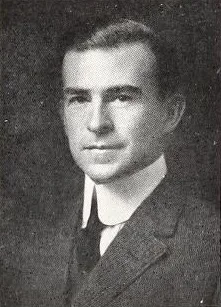
Details
Category
Author
Role
Author / Writer
Industry
Arts & Literature
Wikidata
Q5564227
Birth Date
1884-08-15
Death Date
1967-05-16
Gender
male
Nationality
United States
Birthplace
Tilton
Occupations
botanist
Education
Harvard University
Personal Name
Irving W. Bailey
Awards
Mary Soper Pope Memorial Award
Languages
English
Relationships
Written By (Incoming)
The cambium and its derivative tissuesEffect of the structure of wood upon its permeabilityBotany and its applications at HarvardSome relations between ants and fungiThe conduplicate carpel of dicotyledons and its initial trends of specializationMorphology of Euptelea and comparison with TrochodendronSome misleading terminologies in the literature of "plant tissue culture"The walls of plant cellsThe evolution of herbaceous plants and its bearing on certain problems of geology and climatologyContributions to plant anatomy.The significance of the reduction of vessels in the CactaceaeThe use and the abuse of anatomical data in the study of phylogeny and classificationThe potentialities and limitations of wood anatomy in the study of the phylogeny and classification of angiospermsComparative anatomy of the leaf-bearing CactaceaeComparative anatomy of the leaf-bearing CactaceaeThe occurence of cedrus in the auriferous gravels of CaliforniaNodal anatomy in retrospectSize variations in tracheary cellsBlueprint for botanyThe structure of the bordered pits of conifers and its bearing upon the tension hypothesis of the ascent of sap in plantsThe family HimantandraceaeNotes on neotropical ant-plantsThe rôle of research in the development of forestry in North AmericaPrimitive characters recalled by the Chestnut-bark disease and other stimuliThe relationship between Sphenostemon of New Caledonia and Nouhuysia of New GuineaThe origin and dispersal of herbaceous angiospermsThe problem of differentiating and classifying tracheids, fiber-tracheids, and libriform wood fibersThe significance of the cambium in the study of certain physiological problemsThe significance of certain variations in the anatomical structure of woodComparative anatomy of the leaf-bearing CactaceaeDepressed segments of oak stemsStructure, development, and distribution of so-called rims or bars of SanioA Cretaceous Pityoxylon with marginial tracheidesThe significance of certain wood-destroying fungi in the study of the enzymatic hydrolysis of celluloseComparative anatomy of the leaf-bearing CactaceaeEvolution of the tracheary tissue of land plantsThe morphology and relationships of AustrobaileyaNotes on the "spruce budworm" biocoenoseComparative anatomy of the leaf-bearing CactaceaeDie struktur der tüpfelmembranen bei den tracheiden der koniferenComparative anatomy of the leaf-bearing CactaceaeThe morphology and relationships of Idenburgia and NouhuysiaComparative anatomy of the leaf-bearing CactaceaeAdditional notes on the vesselless dicotyledon, Amborella trichopoda BaillNotes on the wood structure of the Belulaceae and FagaceaeThe "Spruce budworm" BiocoenoseA useful method for the study of pollen in peatThe cambium and its derivative tissuesSome useful techniques in the study and interpretation of pollen morphologyComparative anatomy of the leaf-bearing CactaceaeOxidizing enzymes and their relation to "sap stain" in lumberSome salient lines of specialization in tracheary pittingAuthor's Bibliography 1909-1966Morphology and relationships of Trochodendron and TetracentronAmborella trichopoda BailiThe cambium and its derivative tissuesThe anatomy of certain plants from the Belgian Congo, with special reference to MyrmecophytismAnatomical characters in the evolution of PinusComparative anatomy of the leaf-bearing CactaceaeDegeneriaceaeCooperation versus isolation in botanical researchComparative anatomy of the leaf-bearing CactaceaeSarcandra, a vesselless genus of the ChloranthaceaeThe significance of the foliar ray in the evolution of herbaceous angiospermsThe significance of x-rays in studying the orientation of cellulose in the secondary wall of tracheidsPhragmospheres and binucleate cellsThe relation of the leaf-trace to the formation of compound rays in the lower dicotyledonsThe preservative treatment of woodComparative anatomy of the leaf-bearing CactaceaeThe feeding habits of Pseudomyrmine and other antsThe climatic distribution of certain types of angiosperm leavesGraded volume tables for Vermont hardwoodsThe cambium and its derivative tissues