
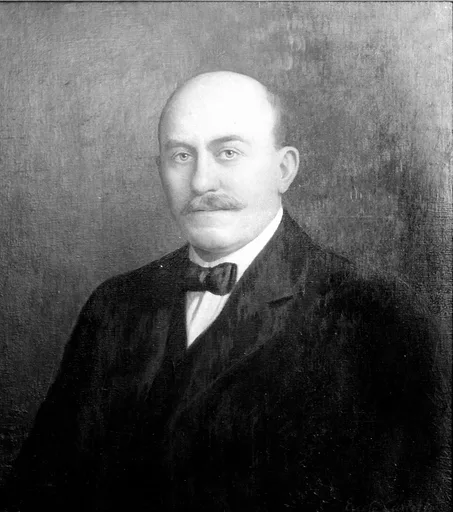
Details
Category
Author
Role
Author / Writer
Industry
Arts & Literature
Wikidata
Q15715355
Birth Date
1865
Death Date
1916
Gender
male
Nationality
United States
Birthplace
New London
Occupations
chemist, university teacher
Education
Johns Hopkins University
Personal Name
Jones, Harry Clary
Languages
English
Relationships
Written By (Incoming)
The theory of electrolytic dissociation and some of its applicationsThe elements of physical chemistryThe nature of solutionabsorption spectra of solutions of comparatively rare salts including those of gadolinium, dysprosium, and samarium, the spectrophotography of certain chemical reactions, and the effect of high temperature on the absorption spectra of non-aqueous solutionsThe electrical conductivity, dissociation, and temperature coefficients of conductivity from zero to sixty-five degrees, of aqueous solutions of a number of salts and organic acidsA study of the absorption spectra of solutions of certain salts of potassium, cobalt, nickel, copper, chromium, erbium, praseodymium, neodymium, and uranium as affected by chemical agents and by temperatureDetermination of the atomic weight of cadmium, and the preparation of certain of its subcompounds...The nature of solutionThe absorption spectra of solutions of comparatively rare saltsHydrates in aqueous solution.The theory of electrolytic dissociation and some of its applicationsThe freezing-point lowering, conductivity, and viscosity of solutions of certain electrolytes in waterConductivities and viscosities in pure and in mixed solvents.The modern theory of solutionA new era in chemistryOutlines of electrochemistryElements of inorganic chemistryThe absorption spectra of solutions of certain salts of cobalt, nickel, copper, iron, chromium, neodymium, praseodymium, and erbium in water, methyl alcohol, ethyl alcohol, and acetone, and in mixtures of water with the other solvents.The freezing-point lowering, conductivity, and viscosity of solutions of certain electrolytes in water, methyl alcohol, ethyl alcohol, acetone, and glycerolThe elements of physical chemistryIntroduction to physical chemistryThe absorption spectra of solutions as affected by temperature and by dilutionThe nature of solutionThe freezing-point, boiling-point, and conductivity methodsThe electrical conductivity, dissociation, and temperature coefficients of conductivity from zero to sixty-five degrees of aqueous solutions of a number of salts and organic acids.Elements of inorganic chemistryThe elements of physical chemistryElements of inorganic chemistry.study of the absorption spectra of solutions of certain salts of potassium, cobalt, nickel, copper, chromium, erbium, praseodymium, neodymium, and uranium as affected by chemical agents and by temperatureConductivity and viscosity in mixed solventsabsorption spectra of solutions as studied by means of the radiomicrometer.The electrical nature of matter and radioactivityThe freezing-point, boiling-point and conductivity methods.The absorption spectra of solutions of certain salts of cobalt, nickel, copper, iron, chromium, neodymium, praseodymium, and erbium in water, methyl alcohol, ethyl alcohol, and acetone, and in mixtures of water with the other solventsPrinciples of inorganic chemistry.The absorption spectra of solutions as studied by means of the radiomicrometer.Hydrates in aqueous solution.The electrical nature of matter and radioactivityA new era in chemistryThe electrical nature of matter and radioactivitynew era in chemistryElements of inorganic chemistryThe electrical nature of matter and radioactivityThe theory of electrolytic dissociation and some of its applicationThe absorption spectra of solutions of certain salts of cobalt, nickel, copper, iron, chromium, neodymium, praseodymium, and erbium in water, methyl alcohol, ethyl alcohol, and acetone, and in mixtures of water with the other solvents.A study of the absorption spectra of solutions of certain salts of potassium, cobalt, nickel, copper, chromium, erbium, praseodymium, neodymium, and uranium as affected by chemical agents and by temperature