
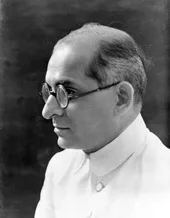
Details
Category
Author
Role
Author / Writer
Industry
Arts & Literature
Wikidata
Q2721812
Birth Date
1887-12-30
Death Date
1971-02-08
Gender
male
Nationality
British Raj
Birthplace
Bharuch
Occupations
lawyer, journalist, politician, freedom fighter, pedagogue, activist, writer
Education
Maharaja Sayajirao University of Baroda
Personal Name
Kanaiyalal Maneklal Munshi
Languages
Gujarati, English
Positions
- Governor of Uttar Pradesh (1952–1957)
- Member of the Constituent Assembly of India (1946–1950)
- member of the Committee for Rules of Procedure of the Constituent Assembly of India (1946–1946)
- member of the Steering Committee of the Constituent Assembly of India (1947–present)
- Member of the Advisory Committee of the Constituent Assembly of India (1947–present)
- member of the Business Committee of the Constituent Assembly of India (1947–present)
- member of the Committee on Subjects Assigned to the Union Centre (1947–present)
Relationships
Written By (Incoming)
Adadhe rāste.Paurāṇika nāṭakoSvapnasiddhinī śodhamāṃDhruvasvāminīdevīTapasviniIndian constitutional documentsThe gospel of the dirty hand, and other speeches on the policy and programme of land transformationDhruvasvāminīdevīPratiodhaPresident under the Indian ConstitutionJanu's death and other Kulapati's lettersMunshi granthavaliḌô. MadhurikāGaurava k pratkaŚiśu ane sakhīNarasaiyā bhakta harinoVeranī vasūlātaŚambara-kanyāFoundations of Indian cultureambara-kanyGujarāt and its literatureThe president, under the Indian constitutionViews and vistasSaga of Indian sculptureRājādhirājaBhagawan ParashuramaKing of kingsI follow the MahatmaTapasviniSparks fom a governor's anvilŚiśu aura sakhiIndian inheritanceGujarāta and its literatureBhagavāna ParaśurāmaGandhiji's philosophy in life and actionTo Badrinath.The lord and master of GujaratSāmājika nāṭakoBhagavadgītāBhāratīya saṃskr̥ti ane bīja lekhoPresident under the Indian ConstitutionWarnings of historyPaṭaṇa kī prabhutāJaya SomanāthaMahabharataSūktisañcayaSneha sambhramaViśvamitra.Narasiṃhayugana kavioVāhare meṃ vāhaGujarātano nāthaBhagavad Gita and modern lifeLopāmudrāBhagavāna KauṭilyaSvapna drashThe Indian deadlockSaga of Indian sculpture.The end of an era; Hyderabad memoriesLōmaharshiṇīNavalikāoIndian temple sculpture.ViśvāmitraVāha re maiṃ vāha!Cakravarrtī GūrjaroThe early Aryans in GujarātaAtta ke svapnaSaga of Indian sculptureḤaidarābād jo kabhī thā?Somanatha, the shrine eternalKrishnavataraI follow the MahatmaThe changing shape of Indian politicsBhagna pādukāThe glory of PatanGlory that was Gürjara deśaAparādhī kauna?Gandhi, the masterKono vāṅka?LopāmudrāDhruvasvāminī DevīAḍadhe rasteAparādhī kauna?Pr̥thivīvallabhaProblems of food and agricultureSvapna drashṭā.KrishnavataraGujarāta ke gauravaSomnath, the shrine eternalGlory that was GūrjaradeśaJaya Somanathend of an era; Hyderabad memories.Atīta ke svapnaGujarārano nāthaThe ruin that Britain wrought.Paurāṇika nāṭako.Bhagavān ParaśurāmaḥRājādhirājaSāmājika nāṭako.Munshi granthavaliNational emergency and its problemsGujarāta and its literatureIndian temple sculpture.SvapnadrashṭrāSomnath, the shrine eternalThe wolf boyLopamudraAḍadhe rasteDo paurāṇika nāṭakaMunaśīno vaibhavaMunaśī granthāvaliBhagavāna ParaśurāmaAsmitānā udgātā - Kanaiyālāla MunaśīPr̥thivīvallabhaParade ke āra pāraChīe teja ṭhīkaLinguistic provinces and the future of BombaySparks from the anvilTapasvinīA new outlook.Gujaráta and its literature, a survey from the earliest timesJaya Somanātha