
Details
Category
Author
Role
Author / Writer
Industry
Arts & Literature
Wikidata
Q559235
Notable for
Pieter Catharinus Arie Geyl (15 December 1887 – 31 December 1966) was a Dutch historian, well known for his studies in early modern Dutch hi
Birth Date
1887-12-15
Death Date
1966-12-31
Gender
male
Nationality
Kingdom of the Netherlands
Birthplace
Dordrecht
Occupations
historian, politician, university teacher, writer, professor
Education
Leiden University
Bio
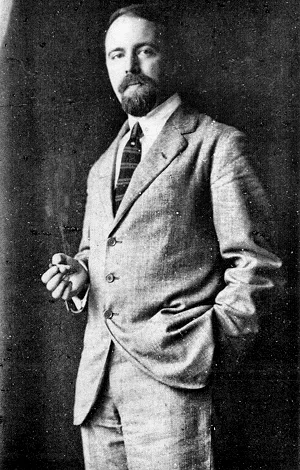
Pieter Catharinus Arie Geyl (15 December 1887 – 31 December 1966) was a Dutch historian, well known for his studies in early modern Dutch history and in historiography.
Geyl was born in Dordrecht and graduated from the University of Leiden in 1913. His thesis was on Christofforo Suriano, the Venetian Ambassador in the Netherlands from 1616 to 1623. He was married twice, first to Maria Cornelia van Slooten in 1911 (who died in 1933) and secondly to Garberlina Kremer in 1934.
Geyl worked as a teacher at a gymnasium (grammar school) in Schiedam (1912–1913) before going on to serve as the London correspondent for Nieuwe Rotterdamsche Courant newspaper. During this time, Geyl befriended many influential people in Britain. In 1919 Geyl took up a professorship in Dutch history at the University of London, where he taught until 1935. In 1935, Geyl returned home to become a professor at the University of Utrecht.
In 1940, Geyl wrote an article on how historians view Napoleon. It was due to be published in June 1940, but after the German occupation in May 1940, the publishers declined to publish Geyl's article out of the fear that comparisons could be made between Napoleon and Adolf Hitler. In September 1940, Geyl used his article for the basis of series of lectures at the Rotterdam School of Economics. In October 1940 the SD (Security Service) of the SS took Geyl hostage in retaliation for what the Germans alleged to be maltreatment of Germans interned in the Dutch East Indies. Geyl spent thirteen months at the Buchenwald concentration camp. Even after his release from Buchenwald, Geyl continued to be held by the Germans at a Dutch prison until he was finally released for medical reasons in February 1944.
In 1945 Geyl became the chair of history at the University of Utrecht. In his opening address, he called for his students to disprove political and cultural myths that could lead to movements like National Socialism. Geyl was a critic of the Sonderweg interpretation of German history that argued that Nazi Germany was the inevitable result of the way German history developed. In particular, Geyl defended the German historian Leopold von Ranke against the charge of being a proto-Nazi.
Geyl was best known as a critic of the British historian Arnold J. Toynbee, who seemed to maintain that he had discovered "laws" of history that proved how civilizations rise and fall. Geyl often debated Toynbee both on the radio and in print. He accused Toynbee of selective use of evidence to support pre-conceived notions and of ignoring evidence that did not support his thesis. In addition, Geyl considered Toynbee's theory to be simplistic, ignoring the full complexity of the past; he regarded Toynbee's theory of "challenge and response" to explain historical change as too loose and a catch-all definition. Finally, Geyl was opposed to Toynbee's apparent claim that Western civilization was in terminal decline.
Geyl was noted for challenging the then-popular theory that the historical separation of the Dutch and the Flemings was a result of "natural" causes. Geyl claimed that there was a "Greater Netherlands" history and that the Dutch and Flemings only separated during the Eighty Years' War (better known as the Dutch Revolt in the English-speaking world) against Spain in the 16th century. Geyl argued that the revolt failed in the south not because of political, cultural or religious differences, but only because the geography in the north with its lakes, bogs and rivers favored the rebels and the geography in the south with its flat plains favored the Spanish Army. Had it not been for the accident of geography, Flanders would have been part of the Dutch Republic. Geyl expressed his ideas in a series of articles and in his main work, De Geschiedenis van de Nederlandse Stam (1930–1959, unfinished). In concomitance with his historical ideas, Geyl actively supported the Flemish movement, even not favouring Dutch-Flemish irredentism.[2]
Geyl's work has been criticized for not taking into account the unifying force of administrative and economic developments after the separation and for sometimes drawing artificial boundaries based on language alone; on the other hand, it has been praised for its refreshing approach to the Dutch Revolt, which was in marked opposition to the then-current nationally oriented, almost finalistic view on Dutch and Belgian history as represented by P.J. Blok and Henri Pirenne.[3]
Geyl was also noted for arguing that the House of Orange and the Dutch people were often in conflict, especially during the 18th century. Geyl accused William IV of Orange of using the uprising of the Doelisten (a group of Amsterdam burgers) against the ruling elite to seize power for himself in 1748. Another revisionist claim made by Geyl was that the marriage of William of Orange (later stadtholder Willem II) to Mary Stuart was the main cause of the first Anglo-Dutch War in the 17th century.[4]
Napoleon For and Against was an account of how French historians of different ages and views have regarded the French emperor. From Napoleon's time to the present, French historians have presented Napoleon as either a Corsican adventurer who brought death and destruction to France or as a patriotic Frenchman who brought glory and prosperity. Geyl used his book to advance his view that all historians are influenced by the present when writing history and thus all historical writing is transitory. In Geyl's view, there never can be a definitive account for all ages because every age has a different view of the past. For Geyl the best that historians could do was to critically examine their beliefs and urge their readers to do likewise. Geyl felt that history was a progress of "argument without end", but did not feel that this meant that an "anything goes" interpretation of history was acceptable.
Geyl died on 31 December 1966 in Utrecht.
[WikipediA]
Personal Name
Pieter Geyl
Awards
P.C. Hooft Award, Pour le Mérite for Sciences and Arts order, Knight of the Order of the Netherlands Lion, Commander of the Order of the Crown, Commander of the Order of the British Empire
Languages
Dutch
Positions
- full professor
Relationships
Written By (Incoming)
Debates with historians.Orange and Stuart, 1641-1672.The Netherlands in the seventeenth centuryDebates with HistoriansDe patriottenbeweging, 1780-1787Debates with historiansGeschiedenis van de Nederlandse StamThe revolt of the Netherlands, 1555-1609.Figuren en problemenDebates with historiansEncounters in history. --Orange and Stuart, 1641-72Napoleon, for and againstDebates with historiansThe Netherlands in the seventeenth centuryEncounters in history.The revolt of the Netherlands, 1555-1609.La révolution batave, 1783-1798Encounters in historyVaderlandse gemeenschap in historisch perspectiefHistory of the Low CountriesWillem IV en Engeland tot 1748Duitse en Italiaanse figurenNederlandse figurenVerzamelde opstellenVan Bilderdijk tot HuizingaRevolt of the Netherlands 1555-1609The revolt of the Netherlands (1555-1609)The Netherlands in the seventeenth century.Engelse figurenNapoleon, for and against.The Netherlands divided (1609-1648)The problem of European disunityGeschiedenis van de Nederlandse stam.Use and abuse of historyDemocratische tendenties in 1672Christofforo Suriano, resident van de Serenissime Republiek van Venetië in Den Haag, 1616-1623Napoleon, for and againstThe revolt of the Netherlands (1555-1609)Oranje en Stuart, 1641-1672.Oranje en Stuart, 1641-1672De patriottenbeweging, 1780-1787.revolt of the Netherlands, 1555-1609.Debates with historiansVier maal EuropaNapoleon, for and againstNapoleon, voor en tegen in de franse geschiedschrijvingTochten en toernooienThe Revolt of the Netherlands, 1555-1609The Netherlands in the seventeenth century.Eenheid en tweeheid in de Nederlanden.Debates with historiansGeyl en VlaanderenPatriotten en N. S. B. ersUse and abuse of history.Jahangir's India, the Remonstrantie of Francisco PelsaertNederlandse figurenOrange and Stuart 1641-1672De Witten-oorlog, een pennestrijd in 1757Vier maal EuropaHet stadhouderschap in de partij-literatuur onder De WittGeschiedenis van de Nederlandse stam.Use and abuse of historyRevolt of the Netherlands 1555-1609Pennestrijd over staat en historie. Opstellen over de vaderlandse geschiedenis aangevuld met Geyl's levensverhaal (tot 1945).Napoleon, for and againstChristofforo Suriano, resident van de Serenissime Republiek van Venetië in Den Haag, 1616-1623Toynbee's answerDebates with historians.Jahangir's India, the Remonstrantie of Francisco PelsaertNapoleon, for and against.Het wachtwoordDebates with historians.Encounters in historyThe revolt of the Netherlands (1555-1609)History of the Low Countries, episodes and problemsUse and abuse of history.No Royalty A/C Napoleon for & Against.geyl.Orange and Stuart, 1641-1672Wilhelm IV en Engleland tot 1748, vrede van Aken.PhoenixNederlands-belgische betrekkingenHistory of the Low Countries, episodes and problemsDebates with historians.ReactiesRevolutiedagen te Amsterdam (augustus-september 1748)Can we know the pattern of the past?De groot-Nederlandsche gedachteDebates with historians.Encounters in History (Original Meridian Book)History of the Dutch Speaking Peoples 1555-1648Vaderlandse gemeenschap in historisch perspectiefThe revolt of the Netherlands, 1555-1609The Revolt of the Netherlands, 1555-1609