
Details
Category
Author
Role
Author / Writer
Industry
Arts & Literature
Wikidata
Q228822
Notable for
Ruth Benedict (born June 5, 1887, New York, N.Y., U.S.—died Sept. 17, 1948, New York City) was an American anthropologist whose theories had
Birth Date
1887-06-05
Death Date
1948-09-17
Gender
female
Nationality
United States
Birthplace
New York City
Occupations
anthropologist, folklorist, university teacher, poet, sociologist, biographer, academic, librarian, writer, ethnologist
Education
Columbia University
Bio
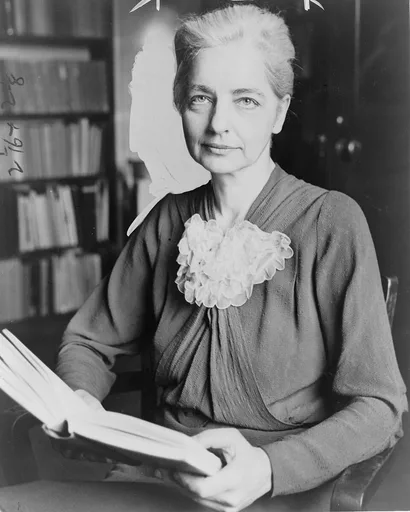
Ruth Benedict (born June 5, 1887, New York, N.Y., U.S.—died Sept. 17, 1948, New York City) was an American anthropologist whose theories had a profound influence on cultural anthropology, especially in the area of culture and personality.
Benedict graduated from Vassar College in 1909, lived in Europe for a year, and then settled in California, where she taught in girls’ schools. In 1914 she returned to New York City.
For some years Benedict sought vainly for an occupation. In 1919 she enrolled at the New School for Social Research, where the influence of Elsie Clews Parsons and Alexander Goldenweiser led her to study anthropology under Franz Boas at Columbia University. She approached the field of anthropology from a strong humanistic background, and even after she became involved in the field in the 1920s, she continued to write poetry under the pseudonym Anne Singleton until the early 1930s. From the outset of her career in social science she conceived of cultures as total constructs of intellectual, religious, and aesthetic elements. She received her Ph.D. in 1923 for her thesis on a pervasive theme among North American Indians, The Concept of the Guardian Spirit in North America (1923). In 1924 she began teaching at Columbia.
Benedict’s first book, Tales of the Cochiti Indians (1931), and her two-volume Zuñi Mythology (1935) were based on 11 years of fieldwork among and research into the religion and folklore of Native Americans, predominantly the Pueblo, Apache, Blackfoot, and Serrano peoples. Patterns of Culture (1934), Benedict’s major contribution to anthropology, compares Zuñi, Dobu, and Kwakiutl cultures in order to demonstrate how small a portion of the possible range of human behaviour is incorporated into any one culture; she argues that it is the "personality," the particular complex of traits and attitudes, of a culture that defines the individuals within it as successes, misfits, or outcasts. Six years later, with the publication of Race: Science and Politics, she refuted racist theory. From 1925 to 1940 she edited the Journal of American Folklore.
During 1943–45 Benedict was a special adviser to the Office of War Information on dealing with the peoples of occupied territories and enemy lands. Her long-standing interest in Japanese culture bore fruit in The Chrysanthemum and the Sword (1946). She returned to Columbia in 1946, and in 1947 she was president of the American Anthropological Association. By that time she was acknowledged as the outstanding anthropologist in the United States. Benedict became a full professor at Columbia in 1948, and that summer she began her most comprehensive research undertaking as director of a study of contemporary European and Asian cultures. Upon her return from a trip to Europe, however, she fell ill and died (<a href=https://www.britannica.com/biography/Ruth-Benedict>Britannica</a>).
Ruth Fulton Benedict was an American anthropologist and folklorist. Benedict held the post of President of the American Anthropological Association and was also a prominent member of the American Folklore Society (<a href=https://en.wikipedia.org/wiki/Ruth_Benedict>Wikipedia</a>).
Ruth Benedict (1887-1948) was one of the most eminent anthropologists of the twentieth century. Her profoundly influential books Patterns of Culture and The Chrysanthemum and the Sword: Patterns of Japanese Culture were bestsellers when they were first published, and they have remained indispensable works for the study of culture in the many decades since (<a href=https://www.amazon.in/Patterns-Culture-Ruth-Benedict/dp/0618619550>Amazon</a>).
Personal Name
Ruth Benedict
Awards
National Women's Hall of Fame, Fellow of the American Academy of Arts and Sciences
Languages
English
Relationships
Written By (Incoming)
Patterns of CulturePatterns of CultureRace and racismKiku to katanaTeiyaku kiku to katana (zen)Patterns of culture.El Crisantemo Y La Espada/ the Chrysanthemum and the SwordPatterns of culturePatterns of cultureTales of the Cochiti IndiansAn anthropologist at workFolkloreLe Chrysanthème et le sabreZuni mythologyJu yu daoPatterns of cultureKiku to katanaPatterns of cultureZuni mythology.Patterns of culture.Krizantem ve kilicraces of mankind.The races of mankindThe chrysanthemum and the swordThe Chrysanthemum and the SwordJu hua yu daoThe concept of the guardian spirit in North AmericaThe Chrysanthemum and the SwordKulturen primitiver Völker / von Ruth Benedict.Grandma Book IIPatterns of CultureThe chrysanthemum and the swordPatterns of cultureKiku to katanaThe Chrysanthemum and the SwordPatters of cultureWatthanatham læ phrưttikam kh ̜ōng ThaiThe Chrysanthemum and the SwordPatterns of culture.Patterns of cultureThe races of mankindThe races of mankindScientific papersRace and cultural relationsConcept of the Guardian Spirit in North AmericaPatterns of cultureRaceAn anthropologist at workRace: science and politicsJu yu daoPatterns of cultureZuni Mythology (Columbia University Contributions to Anthropology Series, No. 21)Kiku to katanaEchantillons de civilisationsJu hua yu jianShowersThe races of mankindRaceThe chrysanthemum and the swordContinuities & Discontinuities in Cultural Conditioning.Patterns of cultureMinzokuThe Chrysanthemum and the SwordThe concept of the guardian spirit in North AmericaAn anthropologist at workTales of the Cochiti IndiansThai culture and behaviorContinuities and discontinuities in cultural conditioningThe chrysanthemum and the swordAn anthropologist at workZuni mythology ...Man, culture, and societyThe chrysanthemum and the swordThe chrysanthemum and the swordAn anthropologist at workThe Chrysanthemum and the SwordPocket guide for American servicemen to the cities of the Netherlands during World War IIPatterns of culture.The chrysanthemum and the swordThe chrysanthemum and the swordRace and racismBicyclingTales of the Cochiti IndiansAn anthropologist at workThe chrysanthemum and the swordRaceThe Chrysanthemum and the SwordÉchantillons de civilisationsThe Chrysanthemum and the swordThe chrysanthemum and the swordPatterns of cultureAn anthropologist at workRaceRace and racismThai culture and behaviorBicyclingAn anthropologist at workRace and racism.The chrysanthemum and the swordAn anthropologist at workGrandma Book IPatterns of culture.The Chrysanthemum and the SwordRaceraces of mankindRacePatterns of cultureNihonjin no kōdō patānZuni mythology ...Patterns of culture.The concept of the guardian spirit in North AmericaRace and racismWen hua mu shiPatterns of cultureAn anthropologist at workAn anthropologist at workKiku to katanaTeiyaku kiku to katana