Details
Category
Author
Role
Author / Writer
Industry
Arts & Literature
Wikidata
Q1763339
Notable for
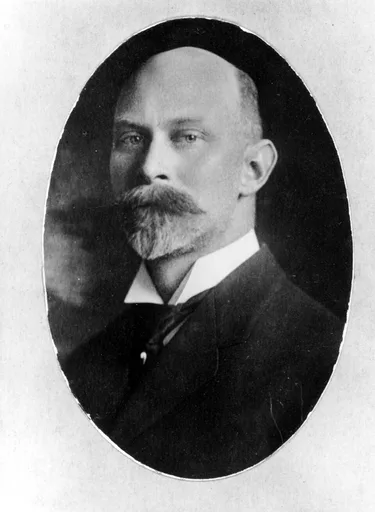
Dr. Thomas Wayland Vaughan was a geologist, paleontologist, and oceanographer . Educated at Harvard (AB, AM, PhD), he was an authority on ma
Birth Date
1870-09-20
Death Date
1952-01-16
Gender
male
Nationality
United States
Birthplace
Jonesville
Occupations
paleontologist, geologist, cnidariologist, researcher, oceanographer
Education
Harvard University
Bio
Dr. Thomas Wayland Vaughan was a geologist, paleontologist, and oceanographer . Educated at Harvard (AB, AM, PhD), he was an authority on marine sediments, fossil and recent corals, and American Tertiary stratigraphy. He was a researcher with the United States Geological Survey (1894-1939), and then joined the United States National Museum where he served as Custodian of Madreporian Corals (1903–23), an Associate in Marine Sediments (1924-1942), and as an Associate in Paleontology (1942-1952). He was also Director of the Scripps Institution of Oceanography from 1924-1936. His research focused on the study of corals and coral reefs, the investigation of larger foraminifera, and oceanography. Under his directorship, Scripps Institute, La Jolla, California, became a leading oceanographical research center.
Personal Name
Thomas Wayland Vaughan
Awards
Order of the Rising Sun, 3rd class, Alexander Agassiz Medal, Penrose Medal, Mary Clark Thompson Medal
Languages
English
Positions
- President of the Geological Society of America (1939–1940)
Relationships
Written By (Incoming)
Miocene corals from TrinidadNew tertiary Foraminifera of the genera Operculina and Operculinoides from North America and the West IndiesA geological reconnaissance of the Dominican republicA Brief Contribution to the Geology and Paleontology of Northwestern LouisianaRevision of the suborders, families, and genera of the ScleractiniaAmerican Old and Middle Tertiary larger Foraminifera and corals.Contributions to the geology and paleontology of the West Indies.A new species of Eocene coral, Archohelia clarki, from CaliforniaThe geology and physical geography of JamaicaFossil corals from Lesser Antilles and Porto RicoA new fossil species of Caryophyllia from California, and a new genus and species of turbinolid coral from JapanLarger Foraminifera of the genus Lepidocyclina related to Lepidocyclina mantelliSuggestions for oceanographic exploration of the PacificA new species of Eocene coral, Archohelia clarki, from CaliforniaFossil corals from Central America, Cuba, and Porto RicoContributions to the geology and paleontology of the Canal Zone, Panama, and geologically related areas in Central America and the West Indies.A geological reconnaissance of the Dominican republicRecent Madreporaria of the Hawaiian Islands and LaysanCriteria and status of correlation and classification of Tertiary depositsOceanographic research at the Scripps Institution of Oceanography, University of CaliforniaUn reconocimiento geológico de la República dominicanaInternational aspects of oceanographyThe temperature of the Florida coral-reef tractReports on the scientific results of the expedition to the eastern tropical Pacific, in charge of Alexander Agassiz, by the U.S. Fish Commission steamer "Albatross," from October, 1904, to March, 1905, Lieut. Commander L.M. Garrett, U.S.N., commanding.Calcareous shallow-water marine deposits of Florida of the BahamasOceanographic work at the Scripps Institution of Oceanography, University of California, La Jolla, CaliforniaResearch facilities at the Scripps Institution of Oceanography.Biological research at the Scripps Institution of OceanographyContributions to the geology and paleontology of the Canal Zone, Panama, and geologically related areas in Central America and the West Indies.Descriptions of new species of Foraminifera of the genus Discocyclina from the Eocene of MexicoReports of the International Committees on the Oceanography and the Coral Reefs of the PacificContributions to the geology and paleontology of the West Indies.Some Cretaceous and Eocene corals from JamaicaAustin folio, TexasThe Eocene and lower Oligocene coral faunas of the United StatesSome shoal-water bottom samples from Murray Island, Australia, and comparisons of them with samples from Florida and the Bahamas