
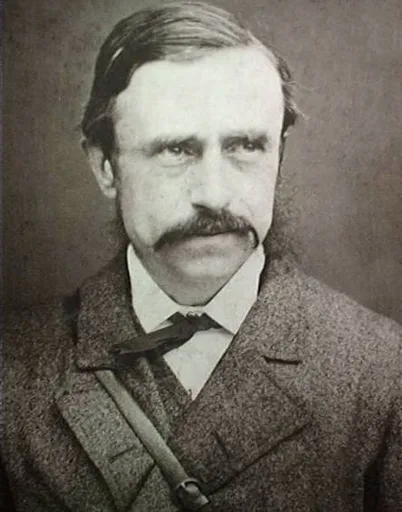
Details
Category
Author
Role
Author / Writer
Industry
Arts & Literature
Wikidata
Q2484394
Birth Date
1837-12-26
Death Date
1929-01-15
Gender
male
Nationality
United Kingdom
Birthplace
Welshpool
Occupations
geologist, archaeologist, anthropologist, paleontologist, university teacher
Education
Rossall School
Personal Name
William Boyd Dawkins
Honorific
Sir
Awards
Fellow of the Royal Society, Knight Commander of the Order of the British Empire, Lyell Medal, Prestwich Medal, Fellow of the Geological Society of London, Knight Bachelor, Fellow of the Society of Antiquaries
Languages
English
Positions
- president (1883–1885)
- president (1900–1902)
- president (1903–1905)
Relationships
Written By (Incoming)
The British Pleistocene MammaliaEarly Man in Britain and His Place in the Tertiary PeriodEarly Man in Britain and His Place in the Tertiary PeriodAddress on the antiquity of manThe arrival of man in Britain in the Pleistocene ageThe discovery of coal near DoverCave huntingMonograph of the British Pleistocene Mammalia; Volume 3The British Pleistocene MammaliaEarly Man In Britain And His Place In The Tertiary PeriodMonograph of the British Pleistocene Mammalia; Volume 3Early Man in Britain and His Place in the Tertiary PeriodThe Channel TunnelThe channel tunnelCave hunting, researches on the evidence of caves respecting the early inhabitants of EuropeEarly Man In Britain And His Place In The Tertiary PeriodThe ancient sources of the endowments of the Church of EnglandOn the Discovery of an Ossiferous Cavern of Pliocene Age at Doveholes, Buxton (derbyshire)A monograph of the British pleistocene mammaliaCanada and the great northwest[PamphletsCanada and the great North-WestAddress on the place of a university in the history of Wales.Early man in Britain and his Place in the Tertiary Period;A monograph of the British pleistocene mammaliaCave HuntingThe Place of the Welsh in the History of BritainThe arrival of man in Britain in the Pleistocene ageOn a Romano-British cemetery, and a Roman camp, at Hardham, in West SussexEarly man in Britain and his place in the tertiary period